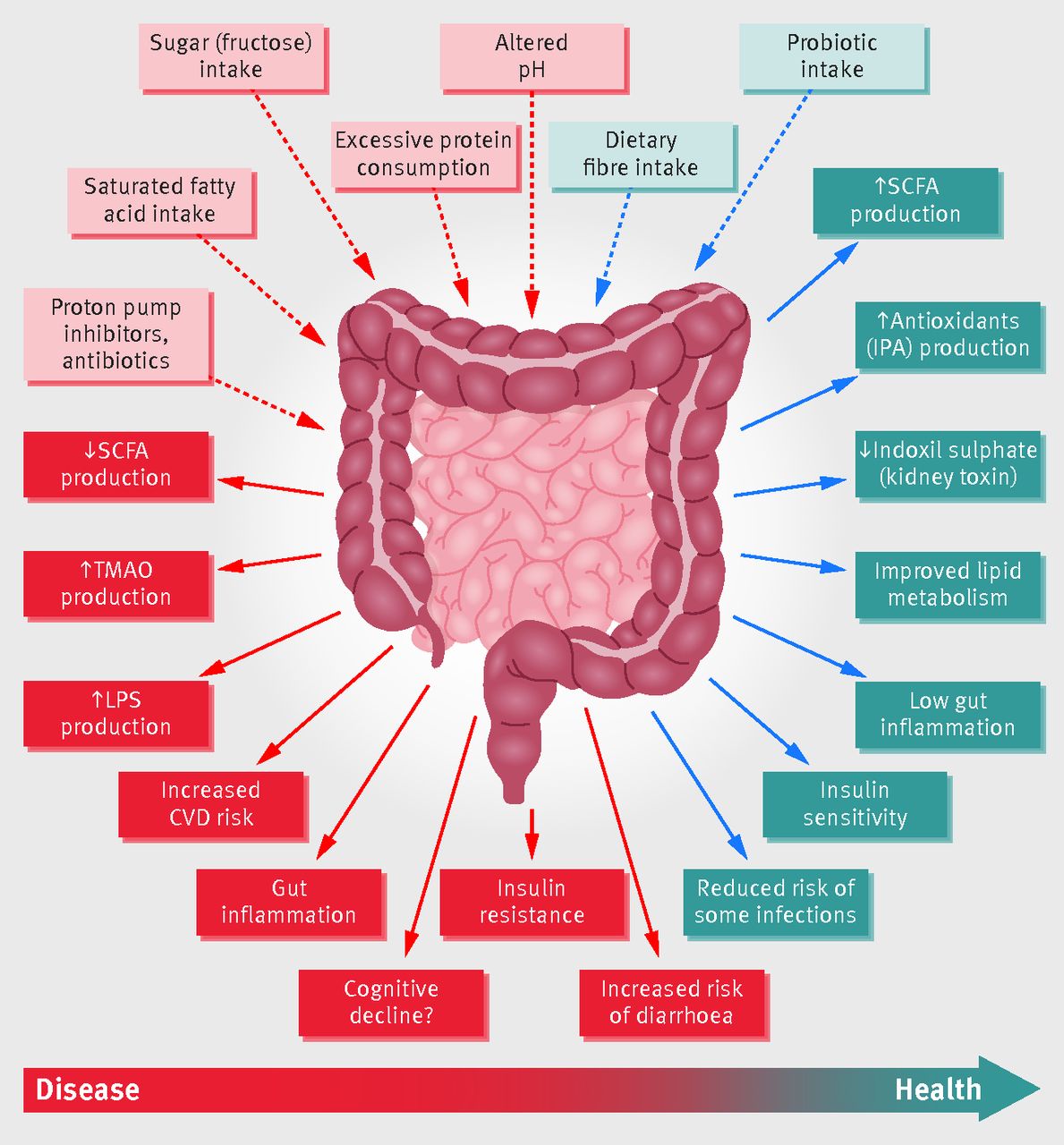
“Gut health” has been a hot topic on TV, in magazines, and on social media for days now. I’m sure many of you are trying out various fermented foods—like yogurt, koji bread, and tofu cheese—or making sure to take probiotic supplements every day.
While some people say, “My bowel movements have improved” or “My skin has cleared up,” others say, “My constipation just won’t go away”, “I still feel gassy and bloating”, or “I keep doing it, but I don’t see any results”. There are quite a few people who struggle with this issue.
Many people believe that increasing the number of “good bacteria” will improve gut health. However, modern research on gut microbiota shows that it’s not that simple.
Research shows that the “essence of gut health” lies in these three factors:
- Diversity: It is more important to have a well-balanced variety of bacteria than to know exactly which specific types are present.
- Stability: Whether the gut microbiome is resilient to environmental changes such as infections, antibiotic use, and dietary changes.
- Functions and Metabolites: Rather than the bacteria themselves, the metabolites they produce—such as “short-chain fatty acids”—are key to gut health and the immune system.
In other words, even if you increase the number of specific bacteria through probiotics or fermented foods, that alone will not change the “soil” of the gut environment itself—this is the view of modern science. While fermented foods have their own unique benefits, a different approach is needed to fundamentally transform the gut environment.
If you’re thinking, “Special ingredients?” or “Expensive supplements?”, the real star is actually a common mineral. Magnesium—often overlooked compared to vitamin C—is involved in over 300 enzymatic reactions in the body. It’s the unsung hero that supports the entire body, playing a vital role in energy production, nerve function, muscle health, heart health, bone health, and blood sugar regulation.
Then, in September 2025, Vanderbilt University Medical Center in the United States announced the results of a double-blind, randomized controlled trial—the most reliable study design in medicine. The findings revealed an entirely new mechanism by which magnesium affects the intestines.
Finding 1: “Specific bacteria capable of synthesizing vitamin D locally” have been identified
It has been clinically demonstrated for the first time in humans that taking magnesium supplements increases the number of specific gut bacteria that actually synthesize vitamin D locally within the intestines. These bacteria are two species: Carnobacterium maltaromaticum and Faecalibacterium prausnitzii.
Although it had long been suggested that vitamin D is produced in the gut, it remained unclear until 2023 which bacteria were responsible for this process. Now, in 2025, it has been demonstrated for the first time in humans that magnesium increases the population of these bacteria.
Finding #2: Vitamin D in the gut does not enter the bloodstream—it acts exclusively at the local site
There is an even more surprising discovery. Evidence suggests that vitamin D produced by gut bacteria does not enter the bloodstream but acts locally within the intestines.
What this means is that there are actually two separate systems for vitamin D:
| System | Route | Range of Effect |
| Conventional (known) | Sunlight → Supplements → Liver → Kidneys → Blood Flow | All over the body |
| New Discovery (2025) | Magnesium → Gut bacteria → Local production in the gut | Only in the gut |
These two systems are believed to function independently of one another, representing a completely new concept in medicine. Neither sun exposure nor vitamin D supplements can replenish “localized vitamin D in the gut”—which means that magnesium-mediated production in the gut has a unique significance distinct from that of systemic vitamin D.
The Many Benefits of gut Vitamin D
Multiple studies have shown that vitamin D produced in the gut plays a broad role not only in preventing colorectal cancer but also in maintaining the overall homeostasis of the intestine.
| Effect | Content |
| Strengthening the intestinal barrier: | Strengthens tight junctions (the connections between cells) and prevents “leaky gut” |
| Regulation of Intestinal Immunity | It suppresses pro-inflammatory Th1 and Th17 cells, increases regulatory T cells (Tregs), and puts the brakes on excessive immune responses |
| Maintaining the diversity of the gut microbiota | Increases beneficial bacteria and reduces harmful pathogenic bacteria. Enhances the diversity and stability of the gut microbiome. |
| Maintaining intestinal homeostasis | It exerts multifaceted effects, including the regulation of cell proliferation, differentiation, and apoptosis; the regulation of inflammatory signaling; and DNA damage repair. |
| Synergistic effects with cancer immunotherapy | Vitamin D activates immune cells through VDR signaling, reshapes the gut microbiota, and enhances antitumor immunity (Latest research from 2025) |
You might ask, “So should I just stop eating fermented foods and switch to magnesium?” But that’s not the case. To be precise, the two work at fundamentally different levels. Fermented foods provide a variety of bioactive compounds and enzymes, and—along with dietary fiber, which serves as food for gut bacteria—help support a healthy gut environment. Magnesium, on the other hand, takes a more fundamental approach by “structurally altering” the gut microbiota from the inside out. Needless to say, dietary fiber, sleep, stress management, exercise, and the appropriate use of antibiotics—all of which have a significant impact on the gut microbiota—remain crucial. I believe that building on this foundation and adding magnesium to enrich the “soil” of the gut environment will become the new standard for gut health.
Please note that the absorption rate of magnesium supplements varies significantly depending on their form. Magnesium oxide (with an absorption rate of approximately 4%) is commonly found in over-the-counter medications. If your goal is to improve your gut health, we recommend organic salt types such as magnesium glycinate or magnesium citrate. Be sure to consult a doctor or pharmacist before starting any supplementation.
This content is intended for informational purposes only and is not a substitute for a diagnosis or prescription from a doctor or pharmacist. Please be sure to consult your primary care physician before adding any supplements or making significant changes to your diet.
- Reference:
- https://link.springer.com/article/10.1186/s13073-016-0307-y
- https://gut.bmj.com/content/73/11/1893
- https://pubmed.ncbi.nlm.nih.gov/39443812/
- https://www.mdpi.com/2072-6643/11/10/2393
- https://pmc.ncbi.nlm.nih.gov/articles/PMC11988781/
- https://www.mdpi.com/1422-0067/26/17/8520
- https://pubmed.ncbi.nlm.nih.gov/32194242/
- https://www.cell.com/cell-reports-medicine/fulltext/S2666-3791(26)00120-5
- https://www.science.org/doi/10.1126/science.adh7954
- https://pmc.ncbi.nlm.nih.gov/articles/PMC12346249/


