Huge amounts of money are being spent on cancer treatment research, but the number of people diagnosed with cancer is only increasing. Immunotherapy has been popular for cancer treatment over the last 9 years, however, with conventional medicine, surgery, chemotherapy and radiation are the big 3 methods of cancer treatment.
Coming from my holistic health background, I don’t personally recommend these traditional methods. However if you are going to start this standard treatment, be careful with the chemotherapy drug called, 5-fluorouracil (5-FU). Marketed as Fluoroplex, Tolak, Efudex, Carac, and Adrucil. These anticancer drugs have been commonly used for 50 years and are still in use today to treat colorectal, breast, lung, stomach, esophageal, cervical, and pancreatic cancer. The oral version of 5-FU is capecitabine, sold under the brand name Xeloda. The American College of Cardiology published a meta-analysis in April 2019 ranking 5-FU as one of the most cardiotoxic drugs used for solid tumor cancers. It has been reported that cardiovascular disease symptoms and heart attacks have been observed after only 12 hours of intravenous infusion.
As you all know, anticancer drugs are highly toxic and can be lethal if not detoxified in the body. The body contains a liver enzyme called Dihydropyrimidine Dehydrogenase (DPD), which inactivates and detoxifies more than 80% of the anticancer drug 5-FU. However, not all of us have an adequate amount of DPD and some people have none. Without the DPD enzyme, fluorouracil-based drugs will continue to poison the body indefinitely, resulting in the development of another disease or, for some, a painful death.
DPD deficiency affects 5% of the population. This means that many people are at serious risk of death from just one dose of 5-FU. In the United States alone, it is estimated that more than 1,300 people die each year from 5-FU toxicity. I urge you to perform a blood test to determine if your DPD liver enzymes are low before you suffer this kind of damage. It is said that doctors rarely explain about the DPD test, so please do not think that you are safe until you test.
In an ideal scenario, cancer is detected early surgery is performed to remove a small tumor. No chemotherapy or other treatments would be required. It may seem as if cancer afflicts a person out of nowhere, like someone who is otherwise healthy just gets cancer, but this is not the case. Cancer symptoms often begin as mild common ailments, and a visit to the doctor may only result in a prescription for drugs to suppress the symptoms, without detecting the cancer cells that are slowly progressing elsewhere. I do think that general cancer screenings are necessary, but there are specialized researchers who say that we need to look at other tests as well.
- Cholesterol
Cholesterol is said to be one of the most important molecules in the body, and doctors tell us to lower it because hypercholesterolemia is bad for heart disease. However low Cholesterol is not always good. Many health professionals say that there is no need to keep it below 200 in general, since the number that suits each person is different. There have been many studies and reports showing an association between progressing cancer and lowering cholesterol. It has also been suggested that lower total cholesterol levels and reduced immune function may increase the risk of cancer development.
- Triglyceride
Like cholesterol, Triglycerides are another form of lipid, and they too have been reported to be related to cancer. Low triglyceride levels are still preferable, and studies have shown that a fasting triglyceride level of 60 to 90 ml/dl before breakfast is normal, while a triglyceride level of 100 mg/dl or more is a danger signal. In particular, many studies have been published on the relationship between triglycerides and breast and pancreatic cancer.
- Gastrointestinal Tract Acid (Stomach Acid)
Stomach acid is composed primarily of hydrochloric acid (HCL), potassium chloride, and sodium chloride. These substances are essential for protein digestion and the absorption of vitamins and minerals. Stomach acid is not only necessary for digestion, but is also important as a bactericidal effect, inhibiting the growth of bacteria and mold. Those with low stomach acidity are prone to diarrhea and gas accumulation due to bacterial infections and abnormal growth. It is reported that if there is polyps in the intestine and low stomach acid, they are more likely to develop colon cancer.
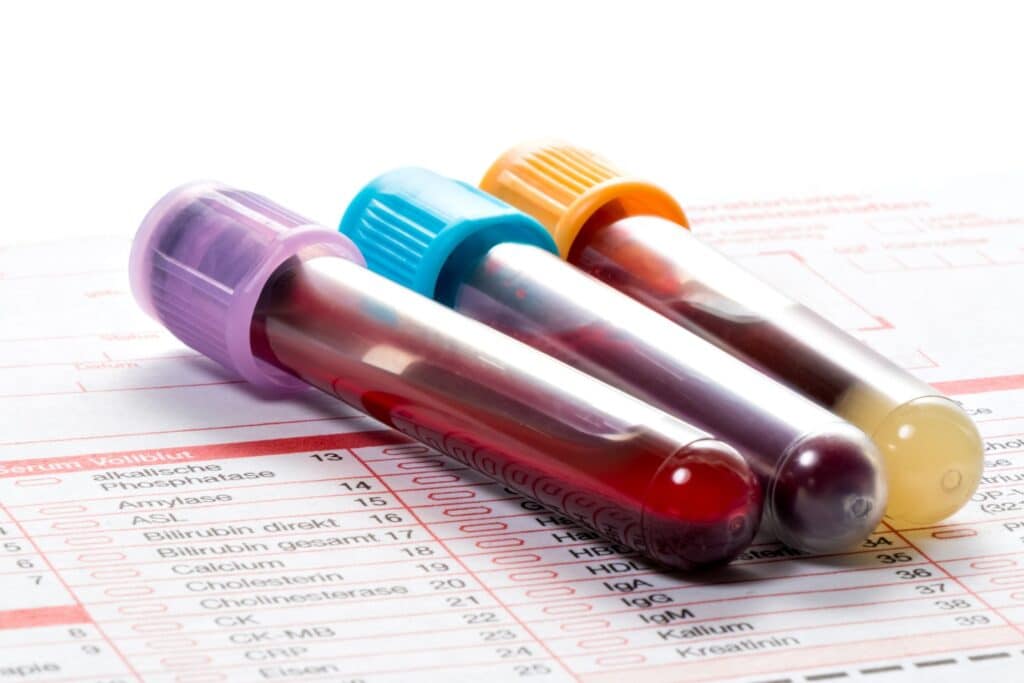
I highly recommended that blood test results be compiled in a spreadsheet so changes in values can be observed over time. Also, you should fill in notes about your physical condition, etc. at that time. Pay a little more attention to yourself this coming year.
Reference:
https://www.ncbi.nlm.nih.gov/pmc/articles/PMC2360753/
https://www.acc.org/latest-in-cardiology/articles/2019/04/05/07/34/fluoropyrimidine-cardiotoxicity/
https://emedicine.medscape.com/article/1746057-overview?form=fpf
https://www.abc.net.au/science/articles/2009/11/04/2733037.htm
https://www.ncbi.nlm.nih.gov/pmc/articles/PMC2768093/
https://pubmed.ncbi.nlm.nih.gov/21140204/
https://www.nature.com/articles/6605264
https://www.ncbi.nlm.nih.gov/pmc/articles/PMC3690626/
https://link.springer.com/article/10.1007/s00432-021-03867-1

 Your Body, Your Health, Your Life