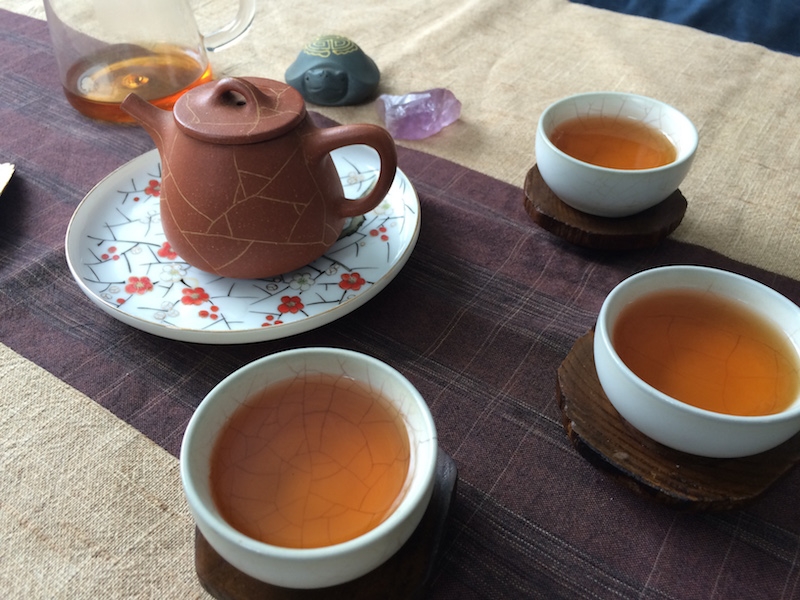
Last summer, a Japanese friend presented me with an elegantly wrapped gift. It was a rare, “premium” oolong tea. Upon returning to bustling New York, that tea became part of my daily routine, a moment of pure bliss. But soon, that routine turned into a nightmare.
The first time I noticed it was in the shower. A shockingly thick clump of hair swirling in the drain. Then the bathroom floor. A quiet panic washed over me. I hadn’t changed my diet or skincare routine, and my stress levels were at their usual “New York standards”… I realized the only new thing in my life was that delicious oolong tea.
I immediately stopped drinking oolong tea and waited for the hair loss to stop, but even as the autumn air grew cold and dry, my hair kept falling out. Determined that this couldn’t go on, I started a detox I’d been avoiding due to the cold weather. And after one month, the hair loss stopped.
The real culprit wasn’t the tea leaves themselves, but the invisible poison lurking within them—heavy metals. Even when touted as “premium,” toxins seep into the leaves due to the soil and processing methods of certain export teas. Slowly, they were corroding my body from within.
Research on the relationship between heavy metal toxicity and hair loss (alopecia) has been extensively reported in academic journals of dermatology and toxicology.
Heavy metals bind to essential nutrients like zinc, iron, and selenium, hindering their absorption and proper utilization. These nutrients play vital roles in keratin production (the protein that makes up hair), cell division, and immune function—all essential for healthy hair growth. Furthermore, certain heavy metals, particularly lead and cadmium, can interfere with the endocrine system and disrupt hormonal balance. This can directly affect the hair growth cycle, especially in women, contributing to hair loss. Heavy metal exposure also induces oxidative stress, which damages hair follicle cells.
The tea we casually drink every day—did you know that tea plants actually have a tendency to absorb heavy metals present in soil and water? Tea leaves cultivated near industrial zones, mines, or smelters are particularly at high risk of contamination.
Tea leaves grown in regions with severe air pollution (such as China and India) have been found to potentially contain lead and mercury. Furthermore, it is not uncommon for lead to accumulate when “rain” containing harmful particles falls directly onto the leaves.
A study released this month by Guangzhou’s Southern Medical University evaluated the levels of toxic heavy metals in 50 tea leaf samples (including green tea, black tea, oolong tea, and dark tea) collected in Guangzhou, China, using advanced chemical analysis methods. Heavy metals were detected in nearly all samples. The average concentrations of the detected elements were as follows: Copper > Chromium > Lead > Arsenic > Cadmium > Mercury
In fact, coffee beans, like tea leaves, can absorb harmful substances from the soil. The problem isn’t limited to the beans themselves. If the water used in processing is unsuitable, or if outdated storage equipment is made of materials that leach heavy metals, even the finest beans can become contaminated.
Many studies claim that heavy metals in tea and coffee are within “safe levels,” but this “level” typically refers to specific regulatory standards (such as those set by the FDA or EFSA). However, these standards do not account for individual consumption habits. In other words, they are based on drinking one to three cups per day. The total amount consumed over a year or five years at that rate is not included within the safe level.
The coffee and tea we consume daily may contain not only heavy metals but also multiple harmful substances such as bisphenols and residual pesticides. In fact, for people like me with the MTHFR gene mutation (a condition that impedes the detoxification process), toxins tend to accumulate in the body even in “trace amounts.” In my case, this manifested as the alarming sign of hair loss.
The manifestation of toxins varies from person to person. Even if you currently feel no noticeable discomfort, invisible accumulation may be progressing within your body. Before serious symptoms appear, be selective in your product choices and practice regular heavy metal detoxification. This is the wisest investment you can make to safeguard your long-term health.
Reference:
- https://pmc.ncbi.nlm.nih.gov/articles/PMC5996622/
- https://www.researchgate.net/publication/318121408_Acute_Alopecia_Evidence_to_Thallium_Poisoning
- https://pmc.ncbi.nlm.nih.gov/articles/PMC7325209/
- https://pmc.ncbi.nlm.nih.gov/articles/PMC11299971/
- https://www.researchgate.net/publication/322284909_Alopecia_and_Associated_Toxic_Agents_A_Systematic_Review
- https://pmc.ncbi.nlm.nih.gov/articles/PMC11275261/
- https://cleanlabelproject.org/coffee-study/
- https://www.mdpi.com/2304-8158/12/17/3254
- https://www.researchgate.net/publication/393445226_A_quantitative_assessment_of_heavy_metal_contamination_in_instant_coffee_beverages_A_comparative_analysis_of_toxic_element_content_and_public_health_risk_implications
- https://pmc.ncbi.nlm.nih.gov/articles/PMC12656080/

 Your Body, Your Health, Your Life