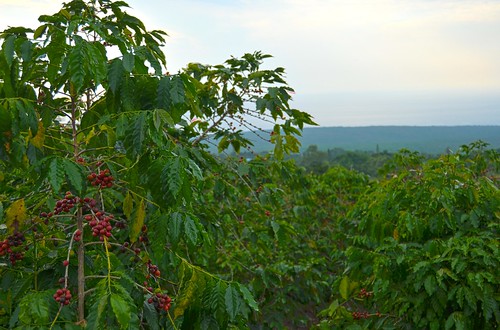
I was in Hawaii last month. Returning to my second hometown after 5 years, I was heartbroken to see Waikiki, Kakawako and Ala Moana losing their local flavor! I was also shocked to find that my favorite Kona coffee became even more pricer! When I lived Hawaii over 30 years ago, I used to stop by Lion Coffee Shop and drink a freshly brewed, delicious Kona coffee for about a dollar, but now that same cup will set you back $6 and a 7-ounce package of beans costs $32! Prices are rising everywhere, not just in Hawaii, which has become the norm, but I wondered why this excessive increase in Kona coffee prices. My friend in Hawaii says that she knows a number of Japanese people who have given up their Kona coffee farms on the Big Island of Hawaii because there is a serious shortage of labor. A local Kona coffee wholesaler I met said it was because the local Kona coffee farmers have set their prices high. He lamented that the prices were too high and it was curbing demand. I understand that Kona coffee costs more than regular coffee because it is hand-picked and is produced in the limited land of Kona on the Big Island of Hawaii. But I felt sad that the price has gone up so much and I wondered if the local people in Hawaii can afford this local product. The high price of products doesn’t only exist in Hawaii, it is happening all over the world. I feel that we are forced to eat vegetables and fruits which are mass-produced by industrial farmers, and processed foods made from these ingredients, because locally harvested produce is too expensive for us to afford. Is this situation a natural progression?
Farmers protest in EU

Have you heard about the farmers’ protest in Europe that began late last year? The movement is part of an ongoing protest against the European Union’s agricultural policies enacted as part of their “Green Deal”. A tractor protest also occurred in Europe in 2019. At that time, it was said to have originated from pent-up anger at the demonization of agriculture as the “cause” of global warming. However, the farmers’ protests seen in many EU countries now are an arrow of anger directed at the “Green Deal” policies enacted by the European Union.
All of these farmers work across 157 million hectares of agricultural land, which is in turn split into 9.1 million holdings. But this distribution is starkly uneven: about 52% of agricultural land is controlled by 4% of all farms, those larger than 100 hectares. By contrast, small-sized farms, those below 5 hectares, use only 6% of all available land, despite representing 40% of all holdings.
On top that, one-third of the EU’s 2021-2027 budget, or ¢386.7 billion, will be used to subsidize farmers. However, this subsidy is paid based on the area under cultivation. As a result, about 80% of the EU agricultural budget goes to roughly 20% of farmers – the largest and wealthiest.
Many of the farmers protesting against EU’s “Green Deal” are those mid-to-small farmers who don’t have enough funds to comply the new policies. It forces livestock and dairy farmers to reduce the number of animals they raise, reduces subsidies for diesel fuel, increases taxes on diesel engines, and prohibits the planting of a certain percentage of farmland as fallow land. It also includes reducing the use of pesticides and chemical fertilizers, organic farming, and compost use. They sound may sound like great policies, but how can those mid-to-small farmers survive? In order for them to reduce what they produce, they have to increase the price to survive. Reducing the use of fertilizers would require employing more land for agriculture, but the EU’s green policies intend to decrease the amount of farmland. Moreover, despite imposing strict regulations on EU farmers to “provide safe food for the people,” they are still importing large quantities of cheap agricultural products from Latin America and Ukraine with no safety regulations or tariffs. So local farmers cannot compete with such cheap imports.
The European Union should provide enough funds to promote local agriculture that enriches farmers’ lives and is good for the environment. However, what EU is doing is completely opposite.
New Genome Technology
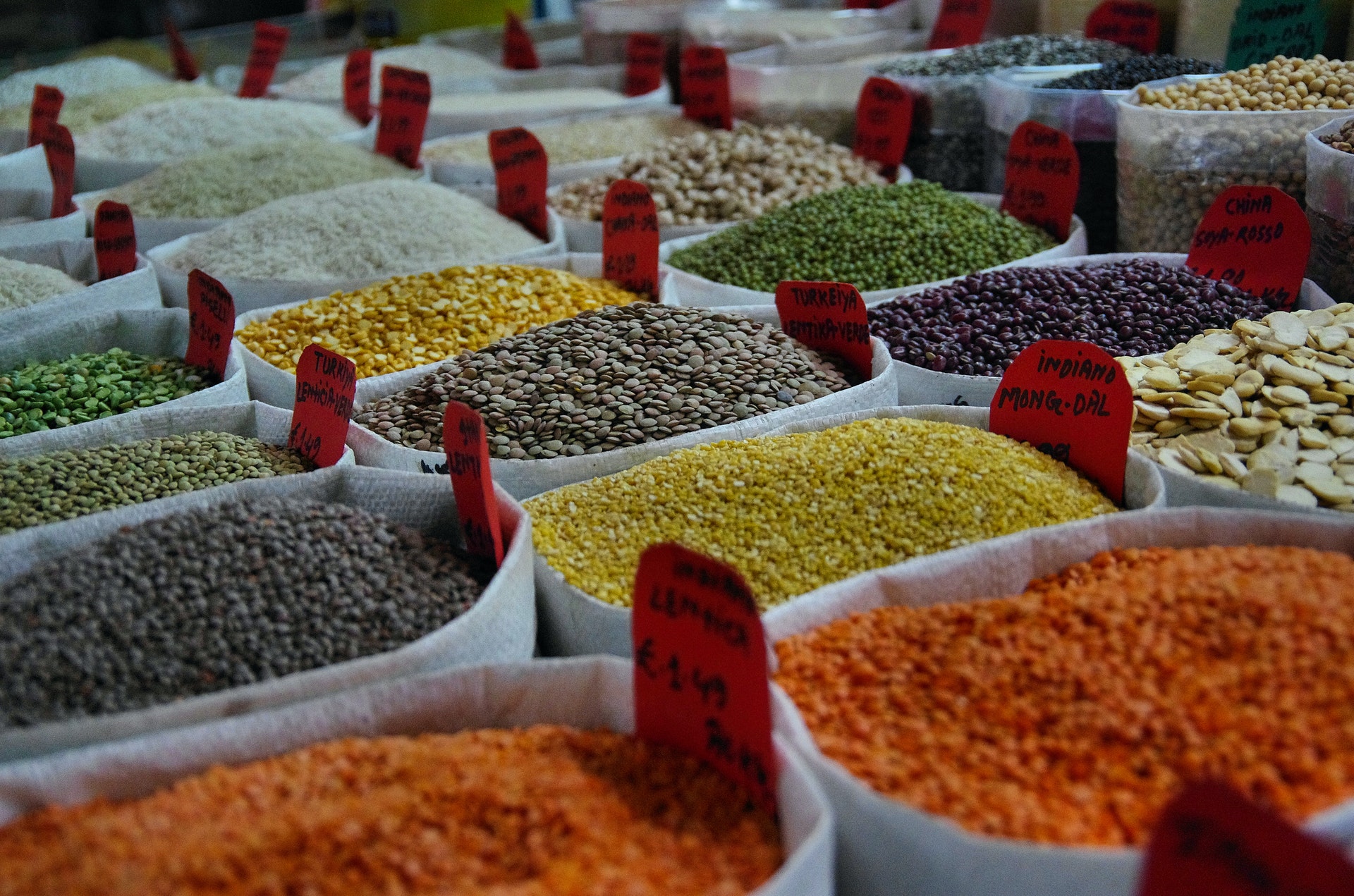
While the EU is enforcing regulations on the use of pesticides and chemical fertilizers, the organization has recommended new genomic technologies as an innovative tool for increasing the sustainability and resilience of food systems. They deem that the technology enables the development of improved crop varieties that are more resilient to climate change, more resistant to pests and diseases, require less fertilizer and pesticides, and ensure higher yields, cutting the use and risk of chemical pesticides in half. So, after all, they are moving forward to allow genetically modified crops.
According to the Food and Agriculture Organization of the United Nations, 75% of the world’s crop varieties disappeared between 1900 and 2000. Now think about the fruits and vegetables you see in the supermarket. There is limited variety and the same fruits and vegetables are offered all year around. Even at the farmers market in NYC we rarely see interesting or unique items.
The giant multinational corporations that control the seed market, such as Bayer and Corteva (DuPont), are destroying the diversity of crop collections. This is because seeds are privately ownable as intellectual property and have been turned into a globally traded commodity. This severely restricts the use by farmers to the varieties sold. Usually, the purchaser must sign a contract that prohibits the farmer from saving the crop seed and replacing or re-seeding it the following year. Violations result in large fines and lawsuits. Furthermore, a farmers’ own seed production and farmer-to-farmer seed exchanges, which have traditionally been carried on (and thus have been a source of crop variety diversity), are considered illegal.
Since these giant multinational corporations are also major producers of genetically modified seeds, the EU’s loosening of restrictions on GMO crops will mean that our food will be further controlled by their intellectual property. Thus as part of the Green Deal, the EU is forcing various conditions on farmers to “secure biodiverse ecosystems,” but these same policies are contradictory and leading towards less biodiversity.
Our food
Since the Covid pandemic, prices have gone up and up and up. Many things that an average family used to enjoy are becoming more out of range, especially the cost of food. On this topic, Kellogg’s CEO, Mr. Pilnick, does not stand by consumers, and rather insult us with comments like “eat cereal for dinner.” According to a recent report by the Groundwork Collaborative, a progressive advocacy organization, 53% of inflation in the second and third quarters of 2023 was due to corporate profits, and 34% since the start of the pandemic. The Federal Reserve Bank of Kansas City also found in its 2023 report that corporate profits contributed to 41% of inflation during the first two years of recovery from the pandemic-induced recession. President Biden also tried to regain his low approval ratings by stating an economic message at the State of Union address that would resonate with voters, that the greed of big business has led to high inflation. Some economists have argued that this high inflation is a flaw in the Biden administration’s economic policies, but there is no doubt that it is large multinational corporations that are profiting from high inflation, and this high inflation is not confined to the United States. So shouldn’t we stand up and take more action like the EU farmers? I think we will need to be truly self-sufficient again like growing our own food because we need to protect our own food, the source of our health and happiness.
Reference:
https://www.euronews.com/my-europe/2024/02/13/all-you-need-to-know-about-the-eu-agriculture-sector
https://petscareinf.com/article/why-farmers-can-t-legally-replant-their-own-seeds/2731
https://www.cnn.com/2024/03/11/economy/inflation-corporate-greed-biden/index.html

 Your Body, Your Health, Your Life